

Uterine Polyps
Hysteroscopy can help identify endometrial polyps and may allow suitable polyps to be removed during the same procedure.
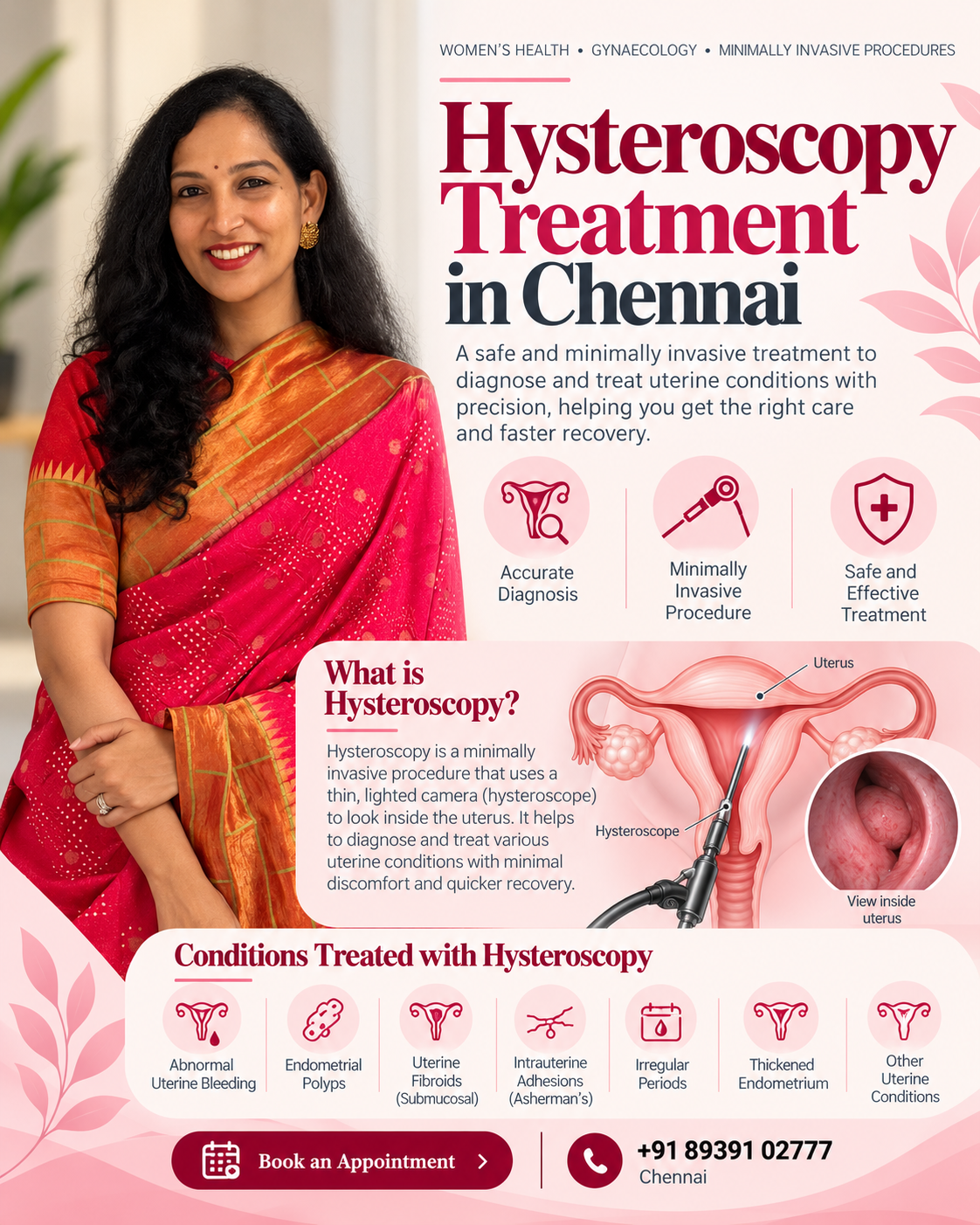
Hysteroscopy Treatment in Chennai may be considered when a woman needs further evaluation or treatment for certain conditions inside the uterus. Dr. Shruthi Sreedhar offers gynaecological consultations to help patients understand their symptoms, investigation results and suitable treatment options.
Hysteroscopy can be used to examine the uterine cavity and, where appropriate, treat selected conditions such as uterine polyps or some fibroids that project into the cavity. The recommended approach depends on the diagnosis and individual clinical assessment.
If you are searching for a hysteroscopy specialist or a gynaecologist in Royapettah, Chennai, a consultation can help clarify the next steps.
Hysteroscopy is a procedure that allows a gynaecologist to view the inside of the uterus using a thin instrument with a light and camera. The instrument passes through the vagina and cervix, so the hysteroscope itself does not require an abdominal incision.
Depending on the reason for the procedure, hysteroscopy may be diagnostic, meaning it is used to investigate a concern, or operative, meaning it is used to treat a suitable abnormality. The treatment plan may involve examination, biopsy or removal of selected tissue.
When considering Hysteroscopy Treatment in Chennai, patients should understand the purpose of the procedure, possible alternatives, pain-relief options and the expected follow-up.
Your doctor may recommend hysteroscopy when symptoms or earlier investigations suggest a problem inside the uterine cavity.
Hysteroscopy can help identify endometrial polyps and may allow suitable polyps to be removed during the same procedure.
It may help investigate certain causes of bleeding between periods, unusually heavy periods or other unexplained uterine bleeding.
Some fibroids that extend into the uterine cavity may be assessed and treated hysteroscopically, depending on their size and position.
Hysteroscopy can help assess scar tissue or adhesions inside the uterus and may be used to treat selected cases.
Direct examination and a tissue sample may be considered when further assessment of the uterine lining is clinically appropriate.
Hysteroscopy may be useful for clarifying selected findings seen on ultrasound or other investigations.
This procedure allows the doctor to inspect the uterine cavity and investigate a concern that may not be fully explained by symptoms or imaging alone.
During operative hysteroscopy, specialised instruments are passed through the hysteroscope to treat suitable abnormalities within the uterus.
Not every uterine condition can be treated with hysteroscopy. Some conditions require medication, monitoring, another procedure or a different surgical approach.
The process depends on whether the procedure is diagnostic or operative, your medical history and the treatment planned.
Your doctor discusses your symptoms, menstrual history, previous scans, medications and relevant medical history.
The reason for hysteroscopy, expected benefits, alternatives, potential risks and pain-relief options are discussed before a decision is made.
You receive instructions based on the planned procedure and setting. Preparation can differ for an outpatient procedure and one performed with sedation or anaesthesia.
The hysteroscope is passed through the cervix to examine the uterine cavity. A biopsy or treatment may be performed if indicated and planned.
Your care team explains recovery, activity guidance, follow-up arrangements and how any tissue or biopsy results will be reviewed.
Some patients experience cramping or discomfort during or after hysteroscopy. Pain-relief options may include medication, local anaesthesia, sedation or general anaesthesia, depending on the procedure and clinical circumstances.
Light bleeding or period-like cramps can occur after the procedure. Recovery time depends on whether treatment was performed, the type of anaesthesia used and individual factors.
Possible complications include infection, bleeding or injury to the uterus. Your doctor can explain the risks and benefits relevant to your planned procedure.
Dr. Shruthi Sreedhar holds MBBS, MS (OBG), MRCOG (London) and FMAS (Apollo) qualifications. Her consultations focus on evaluating gynaecological symptoms, reviewing relevant investigations and discussing suitable care options based on each patient's needs.
If you are looking for Hysteroscopy Treatment in Chennai, a hysteroscopy doctor in Chennai or a best gynaecologist in Chennai for uterine symptoms, you can request a consultation to discuss your concerns and appropriate next steps.
Ojas Health: Royapettah, Chennai
Kauvery Hospital: Alwarpet, Chennai. Contact the hospital to confirm appointment and procedure availability.
Women searching for a gynaecologist near me, a gynaecologist in Royapettah or the best gynaecologist in Chennai may need advice about heavy periods, abnormal uterine bleeding, suspected uterine polyps or other menstrual concerns.
A gynaecology consultation can help determine which investigations are suitable and whether hysteroscopy is an appropriate option. Depending on the condition, treatment may involve observation, medication, hysteroscopy or another procedure.
Assessment of suspected growths in the uterine cavity and discussion of suitable treatment options.
Evaluation of heavy periods and possible underlying causes based on symptoms and history.
Investigation of unexplained bleeding with an individualised assessment and care plan.
Hysteroscopy is used to examine the inside of the uterus and may be used to treat suitable conditions such as uterine polyps, selected fibroids that project into the cavity and certain adhesions. It may also help investigate some causes of abnormal uterine bleeding.
Diagnostic hysteroscopy is mainly used to inspect the uterine cavity. Operative hysteroscopy uses specialised instruments to treat selected abnormalities. The planned approach depends on the clinical findings.
Experiences vary. Some patients feel cramping or discomfort. Discuss pain-relief options with your treating doctor in advance, especially if you have concerns about pain or a previous difficult procedure.
The procedure may take around 5–30 minutes, although duration varies according to its purpose and whether treatment is performed. Preparation and recovery can make the total visit longer.
Yes. Suitable uterine polyps can often be removed using operative hysteroscopy. Your doctor will assess whether this is the appropriate option for the size, location and nature of the suspected polyp.
Follow the instructions provided by your treating team. Preparation depends on the setting, procedure and anaesthesia plan. Tell your doctor about medications, allergies and the possibility of pregnancy.
You can request a consultation with Dr. Shruthi Sreedhar at Ojas Health in Royapettah, Chennai, to discuss symptoms and suitable options. Confirm the location and availability of the procedure with the care team.
Complete the appointment request form below or call 089391 02777 to enquire about consultation availability.
If you are considering Hysteroscopy Treatment in Chennai, send an appointment request to discuss your symptoms, investigation results and suitable treatment options with Dr. Shruthi Sreedhar.
Doctor: Dr. Shruthi Sreedhar
Practice: Ojas Health, Royapettah, Chennai
Phone: 089391 02777
Google Business Profile: Dr. Shruthi Sreedhar
Arrange a gynaecology consultation with Dr. Shruthi Sreedhar to discuss your symptoms and suitable treatment options in Chennai.