
Diagnostic Hysteroscopy
Used to examine the uterine cavity when further evaluation is needed for symptoms or investigation findings.
Women's Health · Chennai
Hysteroscopy Surgery in Chennai may be considered when a gynaecologist needs to examine the inside of the uterus or investigate certain uterine conditions. Dr. Shruthi Sreedhar offers gynaecological consultations to discuss symptoms, diagnostic findings and whether hysteroscopy may be suitable for your situation.
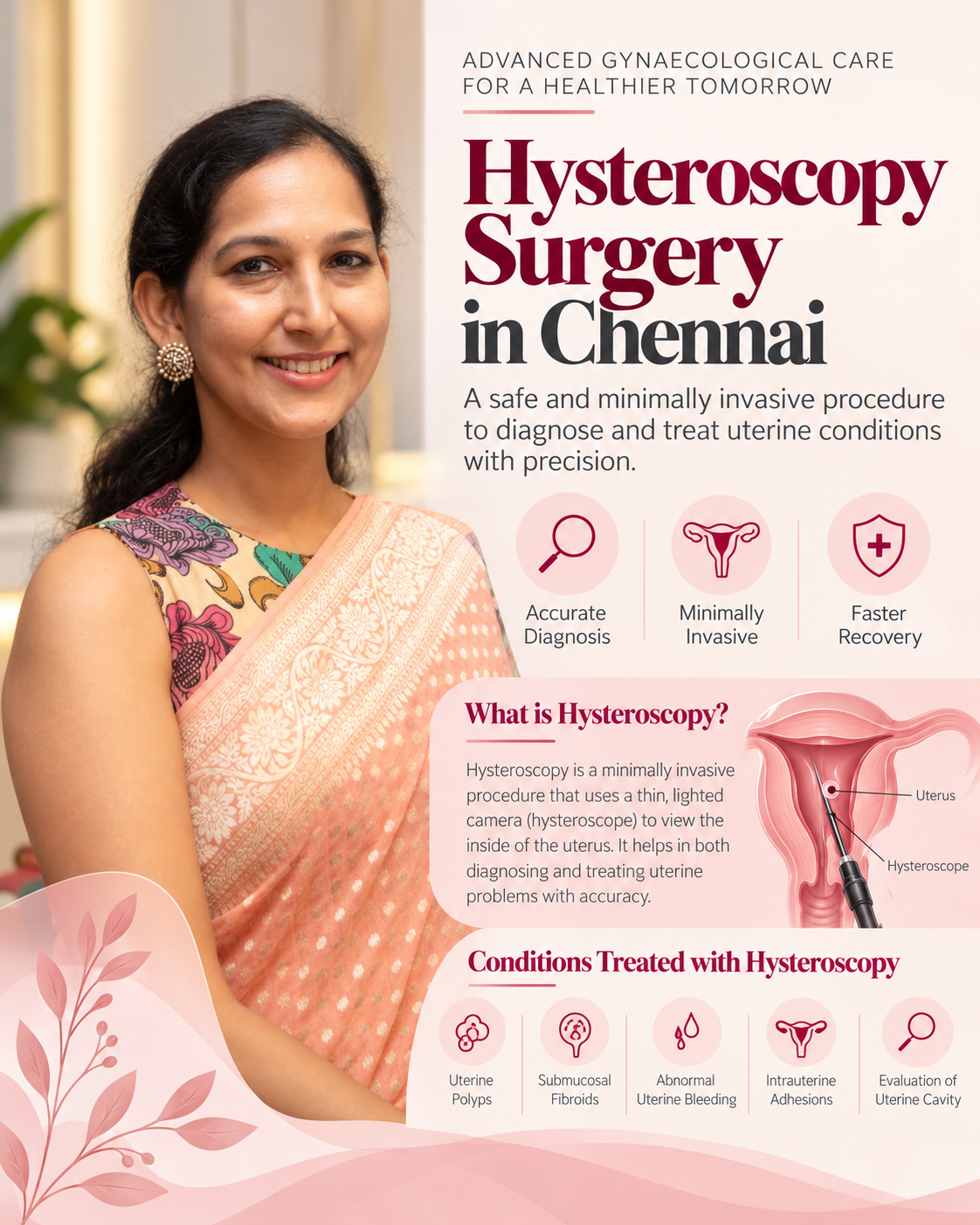
Hysteroscopy uses a thin viewing instrument passed through the vagina and cervix to examine the uterine cavity. Depending on the reason for the procedure, it may be used for diagnosis or to treat selected conditions, such as uterine polyps.
Understanding the Procedure
Hysteroscopy is a procedure that allows a clinician to view the inside of the uterus using a narrow instrument called a hysteroscope. The instrument is passed through the vagina and cervix, so the procedure usually does not require an abdominal incision.
When exploring Hysteroscopy Surgery in Chennai, it is helpful to understand that hysteroscopy can be diagnostic or operative. Diagnostic hysteroscopy helps examine the uterine cavity, while operative hysteroscopy allows selected treatments to be performed during the procedure.
The recommended approach depends on your symptoms, examination findings, medical history and the suspected condition. Dr. Shruthi Sreedhar can discuss your concerns and explain the appropriate next steps during a gynaecological consultation.
Used to examine the uterine cavity when further evaluation is needed for symptoms or investigation findings.
May allow selected conditions inside the uterus to be treated using specialised instruments.
Can help identify polyps and may allow removal when clinically appropriate.
May be considered when abnormal uterine bleeding requires further investigation.
Can help evaluate selected findings, such as suspected adhesions or abnormalities inside the uterus.
May be recommended when ultrasound or other findings require a closer look at the uterine cavity.
When Is It Recommended?
A gynaecologist may recommend hysteroscopy for further assessment of certain symptoms or suspected conditions, including:
Not everyone with these symptoms needs hysteroscopy. Your gynaecologist will assess whether the procedure is necessary or whether another investigation or treatment would be more appropriate.
Changes in menstrual bleeding, unexpected spotting and persistent bleeding can have several causes. A clinical review helps identify which investigations may be useful.
Hysteroscopy may provide direct visual information about the uterine cavity when an ultrasound or other assessment is not enough to answer a particular clinical question.
The decision to proceed with hysteroscopy depends on your symptoms, findings, medical history and the benefits and risks of the procedure in your particular case.
Preparation and Evaluation
Before planning Hysteroscopy Surgery in Chennai, your gynaecologist may review your symptoms, menstrual history, previous scan reports, medications and relevant medical conditions. The preparation required varies depending on whether the procedure is diagnostic or operative.
Discuss your symptoms, previous investigations, current medications, allergies and relevant medical history.
Your clinician may review pelvic ultrasound results and recommend further tests if needed.
The type of hysteroscopy, setting, pain-control options and whether treatment may be performed during the procedure will be discussed.
Follow the clinic's instructions about medicines, eating and drinking, timing and arrangements for getting home, if applicable.
Procedure and Recovery
During hysteroscopy, a thin instrument with a light and camera is passed through the vagina and cervix into the uterus. Fluid may be used to help the clinician see the uterine cavity clearly.
For diagnostic hysteroscopy, the clinician examines the uterine cavity. If operative hysteroscopy is planned, selected treatments, such as removing a polyp, may be performed using specialised instruments.
The setting, pain-control method and length of the procedure depend on its purpose and your individual circumstances. Your clinician will explain what to expect before the procedure.
Recovery varies depending on the type of hysteroscopy and whether treatment was performed. Some people experience mild cramping or light vaginal bleeding for a short time afterward.
Hysteroscopy is generally considered a safe procedure, but risks can include pain, bleeding, infection and, rarely, injury to the uterus or surrounding structures. Your clinician can explain the risks relevant to your planned procedure.
Conditions and Related Care
Hysteroscopy may help investigate or treat selected conditions inside the uterine cavity. The decision depends on the clinical findings and the purpose of the procedure.
Growths in the uterine lining that may be associated with spotting, irregular bleeding or heavy periods.
Some fibroids that project into the uterine cavity may be assessed for possible hysteroscopic treatment.
Hysteroscopy may be useful when further assessment of the uterine cavity is indicated.
Adhesions inside the uterus may sometimes be assessed and treated hysteroscopically.
Selected abnormalities may require direct examination to clarify findings or plan management.
When indicated, tissue obtained during a procedure may be sent for laboratory examination.

Your Gynaecologist
Qualifications: MBBS, MS (OBG), MRCOG (London), FMAS (Apollo)
Dr. Shruthi Sreedhar offers gynaecological consultations for abnormal uterine bleeding, uterine polyps, menstrual concerns and other women's health conditions that may require further investigation.
At Ojas Health, Royapettah, Chennai, patients can discuss symptoms, review available reports and understand whether hysteroscopy or another approach may be appropriate for their case.
Appointments · Royapettah
Looking for Hysteroscopy Surgery in Chennai? Contact Dr. Shruthi Sreedhar to request a gynaecological consultation and discuss your symptoms, investigation results and possible next steps.
Doctor: Dr. Shruthi Sreedhar
Practice: Ojas Health, Royapettah, Chennai
Phone: 089391 02777
Google Business Profile: Dr. Shruthi Sreedhar
Frequently Asked Questions
Answers to common questions about hysteroscopy, its uses and recovery.
Hysteroscopy is a procedure that uses a thin viewing instrument passed through the vagina and cervix to examine the inside of the uterus. Operative hysteroscopy may also be used to treat selected conditions within the uterine cavity.
It may be recommended for further assessment of abnormal uterine bleeding, suspected uterine polyps, selected fibroids or other abnormalities inside the uterus. Not everyone with these symptoms requires the procedure.
Yes. Operative hysteroscopy can allow a clinician to remove suitable uterine polyps under direct visual guidance. The procedure and suitability depend on the clinical findings.
Experiences vary. Some people have cramping or discomfort, while others tolerate the procedure well. Pain-control options depend on the type of hysteroscopy, the clinical setting and individual needs. Discuss these options before the procedure.
Recovery varies depending on whether the procedure is diagnostic or operative and whether treatment was performed. Your clinical team will provide guidance about expected symptoms and when to resume normal activities.
Possible risks include pain, bleeding, infection and, rarely, injury to the uterus or surrounding structures. The risks depend on the procedure and your medical circumstances and should be discussed during your consultation.
It may be recommended when further examination of the uterine cavity is needed. Heavy periods can have multiple causes, so your gynaecologist will decide which investigations are appropriate.
No. Hysteroscopy examines the inside of the uterus using an instrument passed through the cervix. Hysterectomy is surgery to remove the uterus. They are different procedures with different purposes.
Submit the appointment form on this page or call 089391 02777 to request a consultation with Dr. Shruthi Sreedhar at Ojas Health, Royapettah, Chennai.
Related Women's Health Services
Explore related information and services for uterine health and menstrual concerns. Confirm each destination URL before publishing these links.