
Abnormal Uterine Bleeding
Assessment of heavy periods, bleeding between periods or other unexplained uterine bleeding when further examination is appropriate.
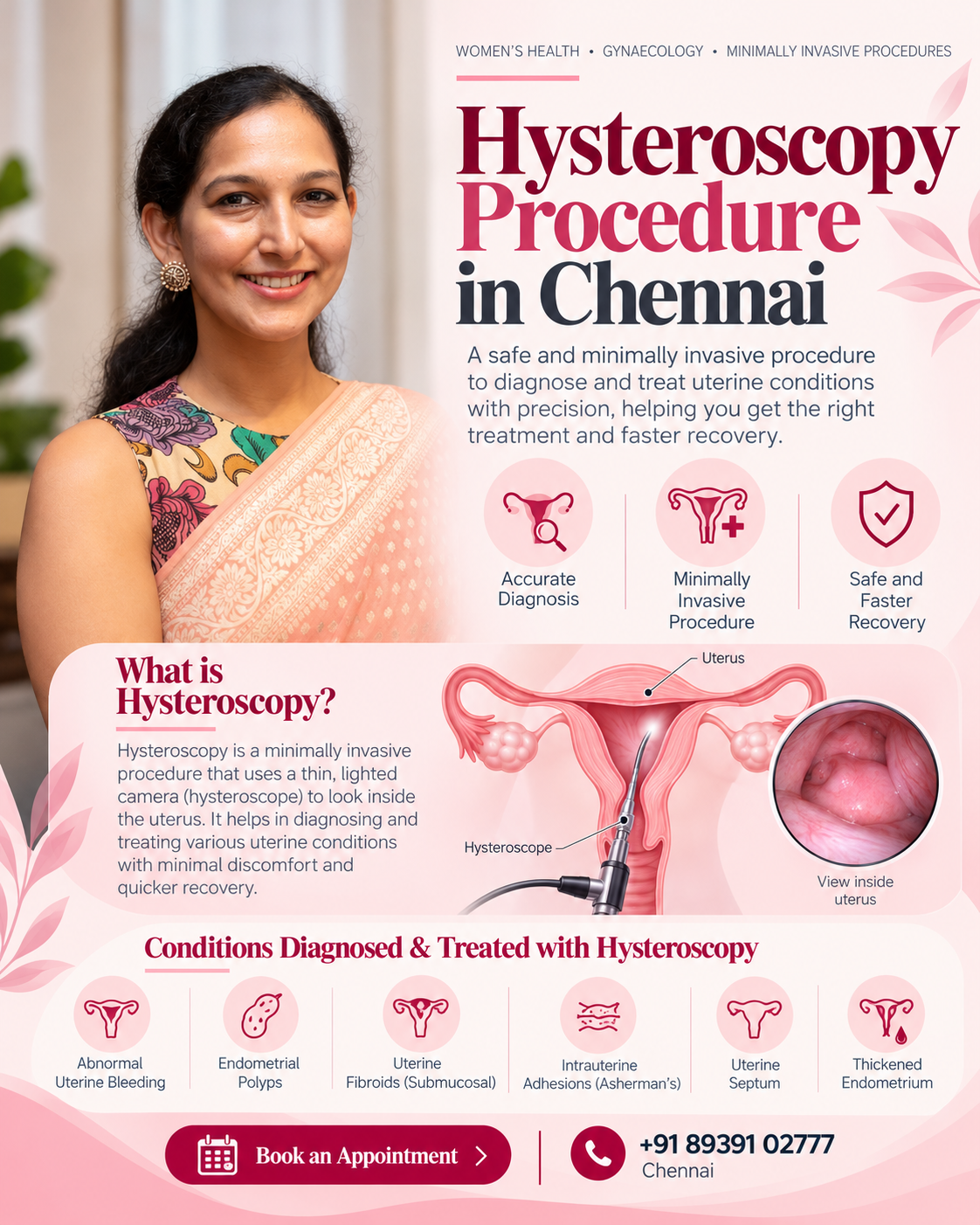
Hysteroscopy Procedure in Chennai can help evaluate the inside of the uterus and, in selected cases, treat conditions affecting the uterine cavity. Dr. Shruthi Sreedhar provides gynaecological consultations to help women understand their symptoms, investigation findings and suitable treatment options.
If you are looking for a hysteroscopy doctor in Chennai for abnormal uterine bleeding, suspected uterine polyps or other uterine concerns, a personalised consultation can help determine whether hysteroscopy is appropriate for you.
Consultation options are available at Ojas Health, Royapettah, Chennai. Hospital-based procedures, when indicated, depend on clinical assessment and the appropriate facility.
A hysteroscopy is a gynaecological procedure in which a thin instrument with a light and camera, called a hysteroscope, is passed through the vagina and cervix to view the inside of the uterus. It does not normally require an incision through the abdomen.
A doctor may recommend hysteroscopy to investigate symptoms, examine the uterine lining, take a tissue sample or treat certain problems inside the uterus. The procedure recommended for each person depends on symptoms, examination findings, imaging and medical history.
When considering a Hysteroscopy Procedure in Chennai, it is useful to discuss the reason for the procedure, the expected benefits, available pain-relief options and whether diagnostic or operative hysteroscopy is being considered.
Your gynaecologist may discuss hysteroscopy when symptoms or previous investigations suggest a problem within the uterine cavity.
Assessment of heavy periods, bleeding between periods or other unexplained uterine bleeding when further examination is appropriate.
Direct examination of suspected endometrial polyps and, where appropriate, removal during operative hysteroscopy.
Evaluation and possible treatment of certain fibroids that project into the uterine cavity. Suitability depends on their size and position.
Assessment of scar tissue or adhesions inside the uterus when symptoms or investigations indicate a need.
Examination of the uterine lining and collection of a biopsy when clinically indicated.
Clarification of selected uterine cavity findings seen on ultrasound or other investigations.
Hysteroscopy is not necessary for every menstrual or pelvic symptom. Your gynaecologist will decide whether it is suitable for your circumstances.
Diagnostic hysteroscopy allows the doctor to look directly at the uterine cavity to investigate possible causes of symptoms or clarify findings from previous tests.
Operative hysteroscopy uses specialised instruments passed through the hysteroscope to treat certain abnormalities found inside the uterus.
The exact process varies depending on whether the procedure is diagnostic or operative, the findings being investigated and the pain-relief or anaesthesia plan.
Your doctor reviews your symptoms, menstrual history, previous reports, medications and relevant medical history to determine whether hysteroscopy may help.
The procedure, expected benefits, possible discomfort, alternatives and relevant risks are discussed. Follow the individual instructions provided by your treating team.
The hysteroscope is guided through the cervix into the uterus. Fluid may be used to improve visibility, allowing the doctor to examine the uterine lining.
If planned and appropriate, the doctor may take a biopsy or treat a suitable abnormality using instruments passed through the hysteroscope.
Your care team explains recovery expectations, any follow-up appointment and how biopsy or tissue results will be communicated if samples are taken.
Some people experience cramping or discomfort during or after hysteroscopy. Pain-relief options vary by setting and procedure and may include medication, local anaesthesia, sedation or general anaesthesia where appropriate.
Light bleeding or period-like cramps may occur afterwards. Recovery and return to usual activities depend on the type of hysteroscopy, any additional treatment and the advice of your care team.
As with other procedures, hysteroscopy has potential risks, including infection, bleeding or injury to the uterus. Your doctor can explain how these considerations apply to your case.
Dr. Shruthi Sreedhar holds MBBS, MS (OBG), MRCOG (London) and FMAS (Apollo) qualifications. Her gynaecology consultations focus on understanding symptoms, reviewing relevant investigations and discussing suitable care options based on each patient's needs.
If you are searching for a hysteroscopy doctor in Chennai or a best gynaecologist in Chennai for assessment of uterine symptoms, arrange a consultation to discuss whether hysteroscopy is appropriate.
Ojas Health: Royapettah, Chennai
Kauvery Hospital: Alwarpet, Chennai. Confirm procedure availability and appointments directly with the hospital.
Women looking for a gynaecologist near me, a gynaecologist in Royapettah or a best gynaecologist in Chennai may seek advice for heavy periods, irregular bleeding, suspected uterine polyps or other menstrual concerns.
A consultation can help establish which investigations are relevant and whether a hysteroscopy, ultrasound, biopsy or another treatment approach should be considered. The appropriate plan depends on the symptoms and clinical findings rather than the procedure name alone.
Evaluation of suspected growths within the uterine cavity.
Assessment of heavy periods and possible underlying causes.
Investigation of unexplained bleeding based on age, symptoms and clinical history.
Hysteroscopy allows a doctor to examine the inside of the uterus. It may help investigate abnormal uterine bleeding, suspected polyps, selected fibroids or other uterine cavity concerns. A biopsy or treatment may also be possible when indicated.
Diagnostic hysteroscopy is commonly used as an examination procedure. Operative hysteroscopy involves treating selected conditions using instruments passed through the hysteroscope. The setting and anaesthesia depend on the planned procedure.
Experiences vary. Some people feel cramping or discomfort, while others tolerate the procedure more easily. Discuss pain-relief and anaesthesia options with your gynaecologist before the procedure.
The procedure may take around 5–30 minutes, depending on its purpose and whether a biopsy or treatment is performed. The overall visit can take longer due to preparation and recovery.
Yes, suitable uterine polyps may be removed during operative hysteroscopy. Whether removal is appropriate depends on the findings, symptoms and individual treatment plan.
Preparation depends on whether the procedure is performed in an outpatient setting or under sedation or anaesthesia. Follow your treating team's instructions about medication, food, drink and timing, and tell them if pregnancy is possible.
You can request a gynaecology consultation with Dr. Shruthi Sreedhar at Ojas Health in Royapettah, Chennai, to discuss your symptoms and appropriate next steps. The location and availability of the actual procedure should be confirmed with the care team.
Complete the appointment request form on this page or call 089391 02777 to enquire about consultation availability.
If you are considering a Hysteroscopy Procedure in Chennai, submit your details to request a consultation with Dr. Shruthi Sreedhar. You can discuss your symptoms, existing scan reports and possible next steps during your appointment.
Doctor: Dr. Shruthi Sreedhar
Practice: Ojas Health, Royapettah, Chennai
Phone: 089391 02777
Google Business Profile: Dr. Shruthi Sreedhar
Speak with Dr. Shruthi Sreedhar about your symptoms, investigations and suitable gynaecological care options in Chennai.